
The Timelessness of Snakes and Ladders
How a common children’s game has survived for centuries as a moral teaching tool.
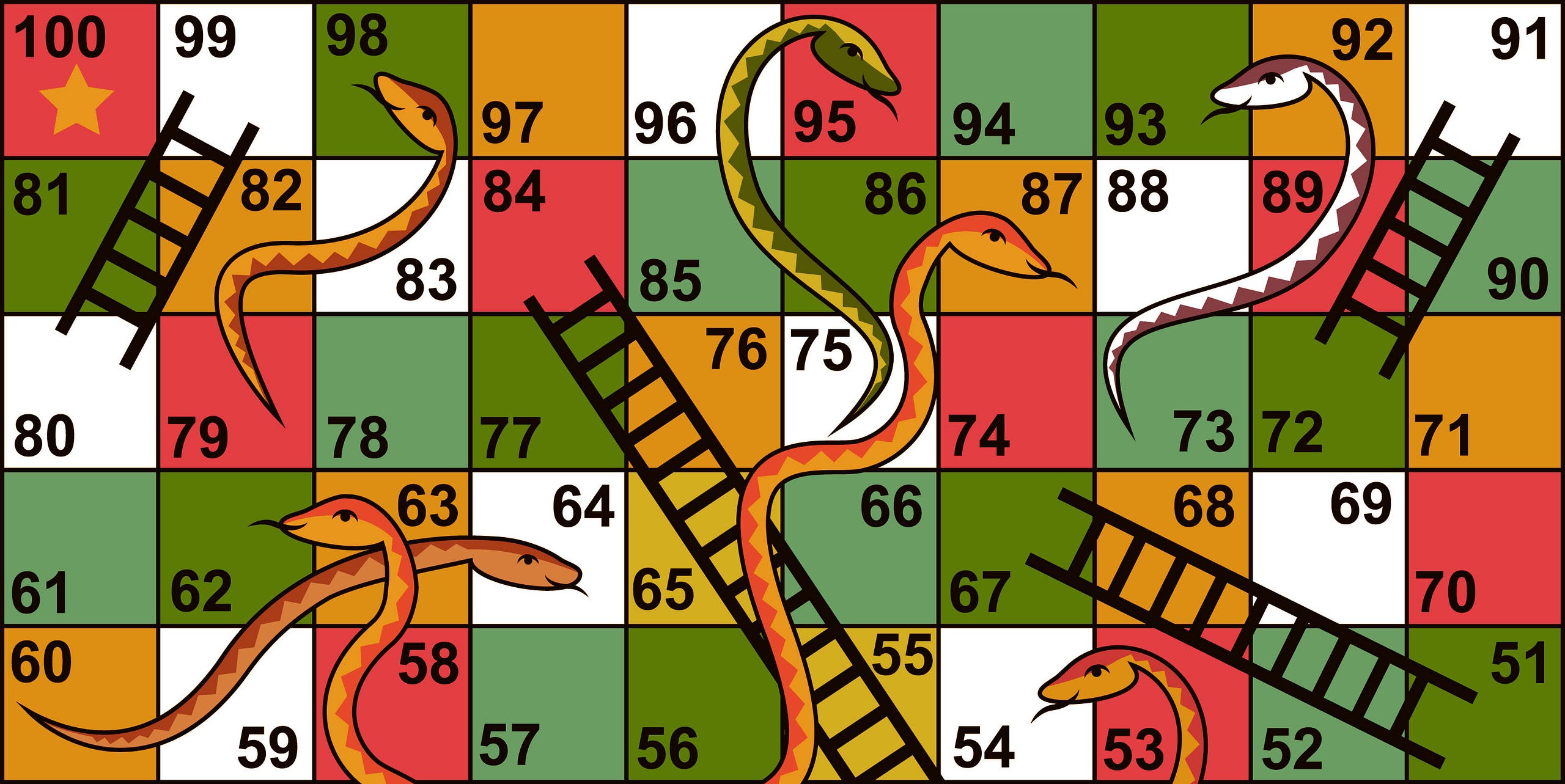
Chances are you’ve played Snakes and Ladders. Rebranded in 1943 by Milton Bradley as Chutes and Ladders, most of us have sat with a version of it at some point in our young lives, but its origins involve much more than just child’s play.
The game is a potent teaching tool whose simple design has been used for centuries, arguably even millennia, as a way to embody and reinforce religious teachings and cultural values. Along the way it’s evolved and adapted to incorporate the themes and aesthetics relevant to each culture that played it, from ancient India to Victorian England, to the US and far beyond.
Surviving game boards suggest that Snakes and Ladders first emerged somewhere in Northern India or Nepal. In its earliest identifiable form it was called Gyan Chauper, though other versions have gone by names like Leela, Moksha Patamu, and Paramapada Sopanapata. These titles translate roughly to terms like Game of Self-Knowledge, Ladder to Salvation, or Steps to the Highest Place, showing the weight of the content it was meant to convey. Over centuries the game traveled and evolved, its basic design serving as a durable chassis for any culture that took it up, containing and transmitting their moral and spiritual beliefs.